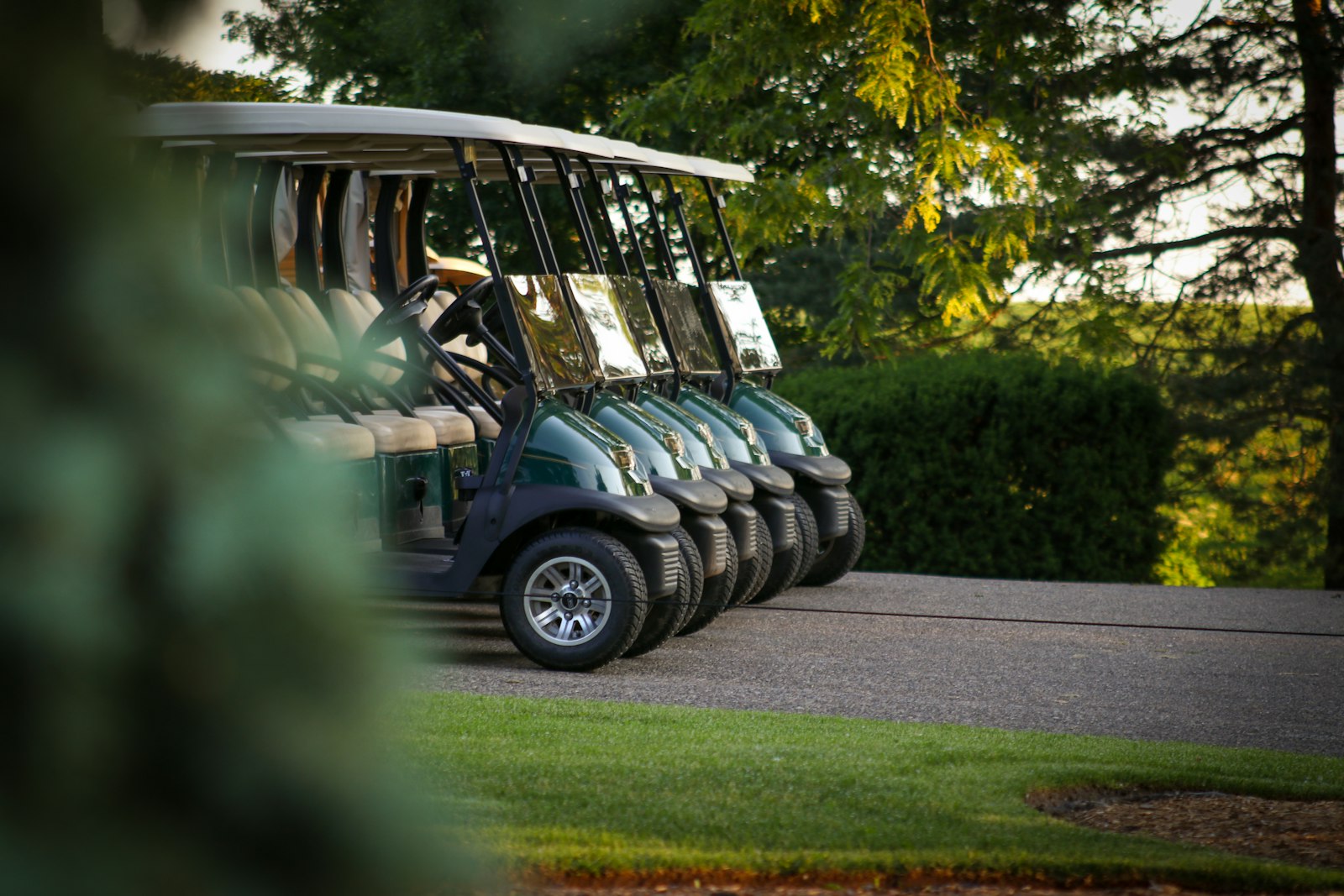
A capable electric golf cart in Michigan — with a lithium battery pack, lift kit, aluminum wheels, and a seat configuration that fits your household — runs $8,500 to $16,000 depending on the brand, trim, and options. That's a serious purchase for most families, and most buyers in our showroom finance at least a portion of it. Financing a golf cart is different from financing a car, and understanding the mechanics before you apply saves money and avoids surprises when the paperwork arrives.
Why Golf Cart Financing Is Growing Alongside the Market
Electric personal vehicles have moved from niche to mainstream. According to Grand View Research, the U.S. electric golf cart market was valued at $529.4 million in 2024 and is projected to reach $886.7 million by 2033, driven by adoption in gated communities, lakefront neighborhoods, resort areas, and buyers who want a capable, quiet personal vehicle for use around their property or community. As prices have risen with feature sets — lithium packs, independent rear suspension, integrated audio, and LED lighting are now standard on mid-tier models — financing has become a normal part of the purchase process.
The difference from automobile financing is that golf carts are rarely treated as titled motor vehicles for loan purposes unless they are configured and registered as Low Speed Vehicles (LSVs). This matters because it affects how lenders classify the loan, which in turn affects rates, terms, and down payment requirements.
How Golf Cart Loans Are Actually Structured
Most golf cart purchases are financed through one of three structures:
- Personal installment loans: Unsecured or secured personal loans from a bank, credit union, or online lender. These are the most common path for buyers who aren't purchasing a street-legal LSV. Terms typically run 24 to 60 months. Interest rates vary significantly by credit profile — the Federal Reserve's G.19 Consumer Credit Report tracks that average interest rates on 24-month personal consumer loans from commercial banks have ranged between 9% and 12% in recent years, with credit unions typically offering 1 to 2 percentage points lower for qualified members.
- Recreational vehicle or powersports loans: Some lenders classify electric golf carts under their recreational vehicle or powersports lending programs, particularly for higher-end models with significant equipment. These loans are often secured by the vehicle title and can carry slightly better rates than unsecured personal loans.
- Dealer-arranged financing: When a dealership offers financing options through lending partners, buyers benefit from a comparison across multiple lenders without running to each individually. At Next Level Carts, we offer golf cart financing in Michigan options across all four brands we carry — ICON, EPIC, Denago, and Alset — and work with lending partners to find competitive terms based on each buyer's profile.
For LSV-configured models that carry a Vehicle Identification Number and state title, auto financing through a bank or credit union becomes available — these loans typically offer longer terms (up to 72 months) and lower rates than unsecured alternatives, similar to a standard auto loan.
What Your Credit Score Determines
Lenders use your credit score as the primary determinant of your interest rate and approval likelihood, but the relationship is more nuanced than just a single number. FICO scores — the most widely used in lending decisions — range from 300 to 850. For consumer installment loans in the $8,000 to $16,000 range:
- 760+: Typically qualifies for the best available rates. On a $12,000 personal loan at 7.5% over 48 months, the monthly payment is approximately $290, with a total interest cost of roughly $1,900.
- 700–759: Good credit range. Expect rates in the 9 to 11% range. The same $12,000 loan at 10% over 48 months runs approximately $304/month with total interest near $2,600.
- 640–699: Rates climb to 13 to 17% in this range. Approval is typically available but at meaningfully higher cost. At 15% over 48 months, the $12,000 loan runs approximately $333/month with $4,000 in total interest.
- Below 640: Most prime lenders decline or require a substantial down payment. Subprime options exist but often carry rates above 20%, which can add more than the vehicle's original value in interest charges over a long term.
John Ulzheimer, a nationally recognized credit expert and former employee of both FICO and Equifax, has noted in his published consumer credit guidance that borrowers who check their credit score and actively address any outstanding derogatory marks 60 to 90 days before applying for a significant consumer loan routinely improve their rate by one to two tiers — translating to hundreds or thousands of dollars in interest savings on a multi-year loan. His work is available at smartmoney.com and in his credit education materials.
Calculating True Total Cost: Financing vs. Cash
Before committing to a financing structure, calculate the total cost of the transaction — not just the monthly payment. A buyer focused only on "keeping the payment under $300" can end up paying significantly more for their cart than a buyer who evaluated the full picture.
Example: a $13,000 EPIC E60FX financed at 9.5% over 48 months:
- Monthly payment: approximately $326
- Total paid over 48 months: approximately $15,670
- Total interest cost: approximately $2,670
The same cart financed at 6.5% (a credit union rate available to well-qualified members) over 48 months:
- Monthly payment: approximately $308
- Total paid: approximately $14,790
- Total interest cost: approximately $1,790
That 3-percentage-point difference costs $880 over the life of the loan. Spending 30 minutes shopping your credit union, your bank, and the dealer's financing partner before signing is almost always worth it at this loan size.
What to Bring to the Showroom
If you plan to finance at or through the dealership, having a few things ready speeds the process and sometimes improves the offer:
- A pre-approval letter from your bank or credit union, even if you intend to use dealer financing. This gives you a confirmed baseline rate and creates competitive pressure for a better offer.
- Proof of income (recent pay stubs or tax returns if self-employed). Most lenders require documentation of income for any loan over $10,000.
- A realistic down payment figure. Putting 20% down on a golf cart reduces the financed amount, improves loan-to-value ratios that affect rate, and shortens the payoff timeline. On a $12,000 cart, $2,400 down means financing $9,600 rather than the full amount.
- Your intended use case — if you want to register the cart as an LSV for street use, tell the salesperson up front. This determines which models and configurations qualify and opens up different financing structures.
FAQ
Can I get a golf cart loan with bad credit?
Yes, but expect higher rates and possibly a larger required down payment. Lenders who specialize in non-prime consumer installment loans exist, but rates on these products routinely exceed 18 to 24%. If your credit needs work, it may be worth waiting 6 to 12 months to address derogatory items before financing a $10,000+ purchase — the interest savings are significant.
Does Next Level Carts offer 0% financing deals?
Promotional financing offers vary by brand, model, and time of year. Some manufacturers periodically offer subsidized rate programs through their preferred lenders. Contact us or visit the showroom to see what current promotional offers are available for the specific model you're interested in — these aren't always advertised widely but can represent meaningful savings when they're active.
Is it better to finance through a credit union or through the dealer?
Credit unions consistently offer lower rates than commercial banks for consumer installment loans to qualified members — often 1 to 2 percentage points lower. If you're a member of a credit union, get a pre-approval from them before visiting the showroom. Dealer-arranged financing is still worth comparing, as some manufacturer programs beat credit union rates on specific models during promotional periods. The right answer is whichever produces the lowest total cost on the specific model and term you want.
How long does golf cart financing approval typically take?
Pre-approval decisions from most banks and credit unions are made within 24 to 48 hours online, often the same day for existing members. Same-day approvals are common for dealer-arranged financing during normal business hours. The full paperwork and funding process typically completes within one to two business days after approval.
What happens if I want to pay off my golf cart loan early?
Most consumer installment loans and auto loans have no prepayment penalty — you can pay the loan off early without additional fees, and doing so eliminates the remaining interest charges. Before signing, verify that the specific loan agreement you're offered has no prepayment penalty. If one exists, either negotiate it out or choose a different lender.